
How Roast Harness works
Roast Harness is a free desktop app for roasting coffee. Tell it the cup you want, and its AI agent, Aden, writes a roast program for your machine, rehearses it on a simulator and runs it on your roaster, with someone staying at the machine.
Describe the cup you want
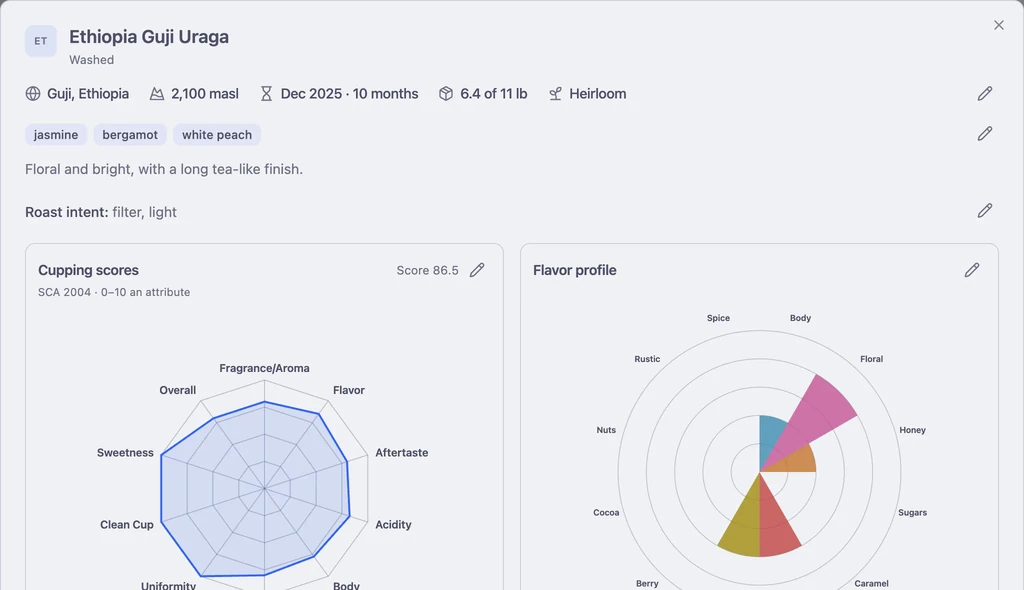
Tell Roast Harness the coffee and the cup you're after, in your own words. Aden writes the roast program for your machine: every heat, air and drum move, on time or on bean temperature.
Rehearse it on a simulator
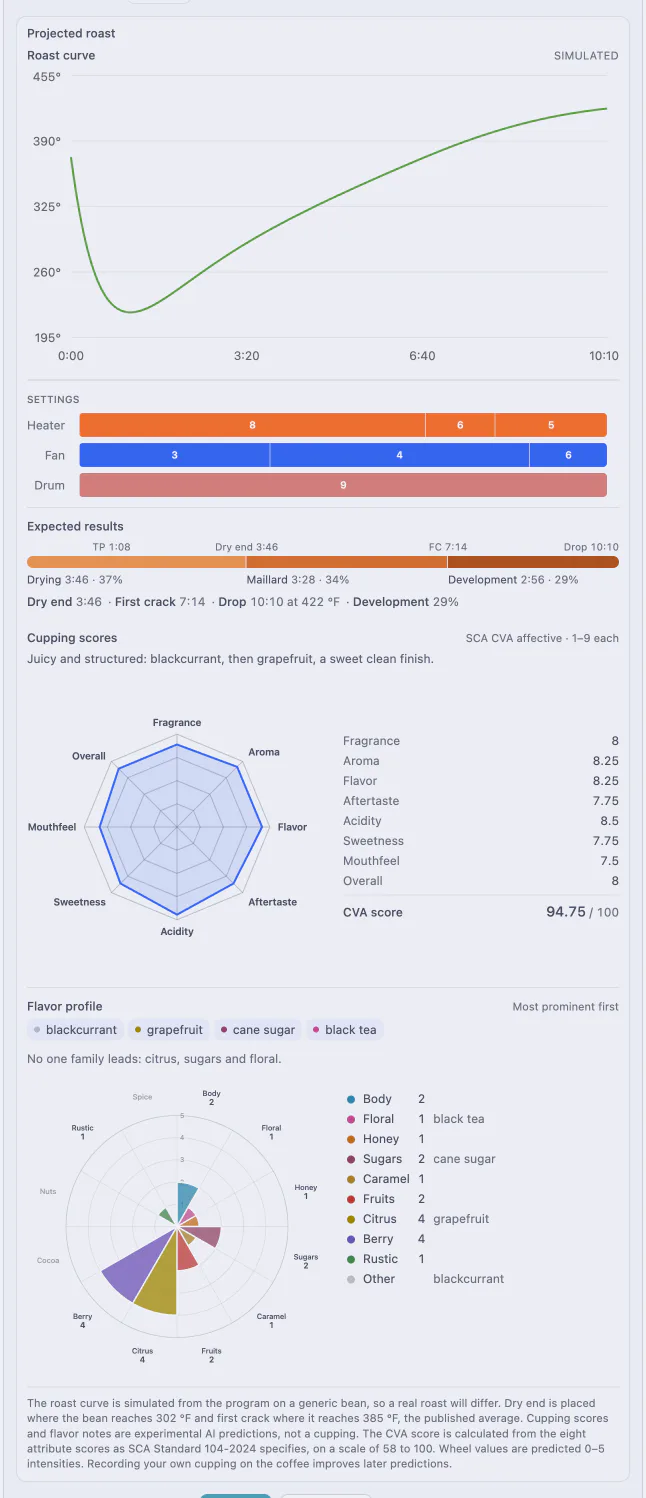
The agent plays its draft forward on a simulator, reads the curve and its grade, and rewrites it, up to six drafts, before a bean sees heat. On a coffee you haven't roasted yet, it rehearses on a typical bean for your machine. After your first roast, it uses that coffee's own numbers. Where we don't have a simulator for your machine yet, it can check the program but not rehearse it.
Roast, with someone at the machine
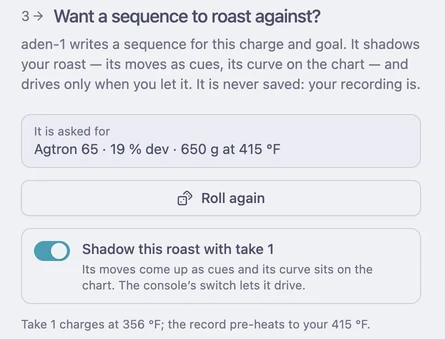
Say go, and it starts the preheat itself. When the machine is ready, pour in the beans, and that starts the roast. The program works the heat, the air and the drum from there, and you drop the batch when it calls the drop. You can take over at any time.
Taste, and say what you'd change
Say it the way you'd tell a friend: too sharp, a little flat, wants more sweetness. The agent rewrites the roast and shows you exactly what it changed, and why. The next batch is drawn from that.
It gets better the more you use it
It improves with use, learning your machine and set-up, and it compares historical and community roast physics to predict maintenance issues.
Every roast you save gives it more to work with on your machine and your coffee. See the supported roasters.
Someone stays at the machine
Someone stays at the machine from the preheat through the whole roast, with a hand near its power switch, ready to stop the roast and take over. Never run a roast unattended.
Software is not a safety device. Your protection against a stuck element, a stalled fan or a bean fire is the machine's own cut-outs and interlocks, and those must be present and working.
You use Roast Harness with a roasting machine at your own risk. The Terms of Service have the full rules.
What else it does for a café
For the manager
- Pick the next coffee. Its origin, process, altitude, harvest age, stock and your notes on one page, with 5,405 more green coffees a ⌘K away.
- Get the roast you want. Describe the cup for your menu. Aden writes the roast for your roaster, simulates the curve and estimates the cup before anyone spends a bean.
- One coffee, every drink. A profile for each drink on your menu, a light filter and an espresso, each a press of play for whoever roasts.
For the roaster
- Press play. Every heater, fan and drum move fires on time or on bean temperature. You stay by the roaster to charge and drop, and can take over at any time.
- Keep the roaster up. After each roast, the upkeep that's due by roast count comes up, and you can ask about any of it.
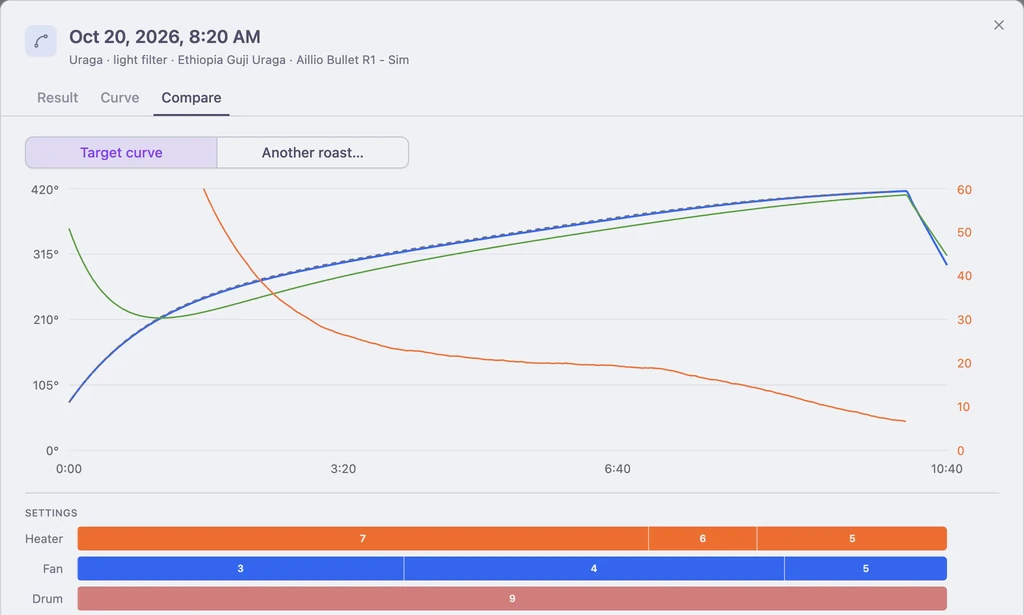
- Check every batch. Each roast you run is laid over its target, figure by figure: roast time, turning point, dry end and finish.
- Fix it by taste. Taste a cup and say what you'd change. Aden writes the revision and shows you exactly what changes, and why.
For the owner
- See what it saves. Your roasting rhythm, the cups poured and what you've saved against buying roasted, every time you open the app.
- Know what's on the shelf. Green on hand, and how many batches and weeks it lasts at your pace.
- No specialist to hire. Anyone on your staff can roast by hand while Aden Experimental shadows: its moves come up as cues, and it drives only when they let it.
- Every batch on record. Every roast logs itself as it runs, whether or not you're there: times, temperatures, weights, development and notes.